



How Small Display Tools Create a Huge Retail Impact
08 January 2026
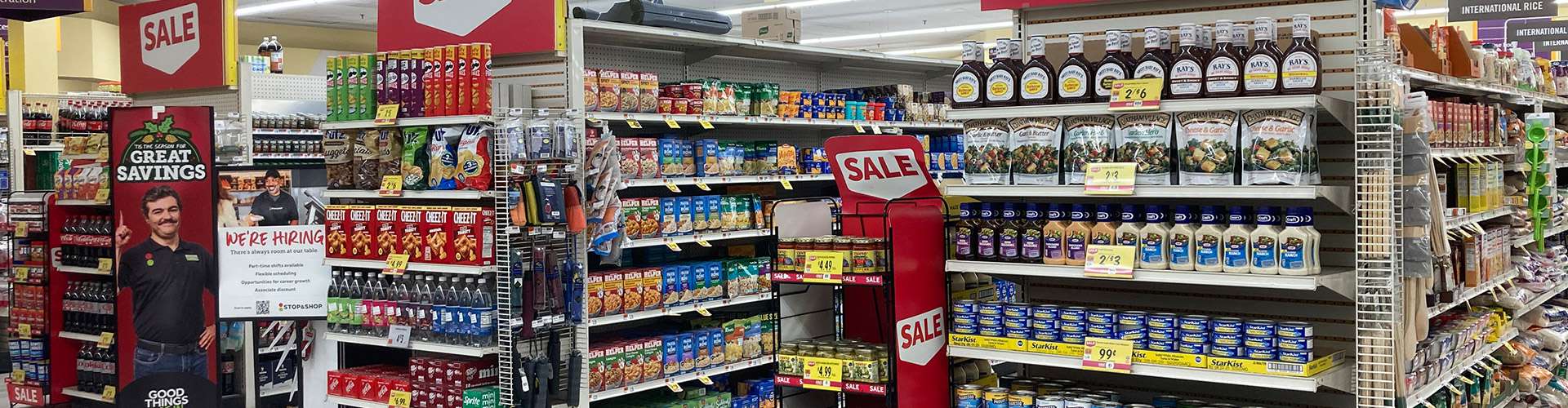


Evolution of Rack Management In today's competitive retail industry, maintaining neat shelves, sufficient inventory, and facing forward is not just visual merchandising; it directly impacts sales conversion rates, customer satisfaction, and overall profitability. Whether in supermarkets or hypermarkets, the rack management system plays a crucial role in reducing shrinkage, simplifying restocking processes, and creating a positive shopping experience.
Despite the heavy reliance of modern retailers on advanced systems, the concept itself has deep historical roots. As early as 1945, Lansing Peter Shield, the president of Grand Union Co., patented one of the first gravity-feed shelf systems (granted in 1948). These inclined tracks allowed staff to load products from the back, ensuring that the next batch of products would automatically slide forward when customers picked them up, thus maintaining a complete display of products at the front of the shelf. This innovation laid the foundation for the evolution of shelf management systems. Today, roller rack solutions have become one of the most efficient, flexible, and customer-centric tools for merchandise display.
A Brief History The carton flow system developed in the mid-20th century was one of the earliest innovations in shelf management. Grand Union established Food-O-Mat as a company to commercialize this system, appointed Gardner Hinckley as president, and assigned the manufacturing business to Gauer Metal Products, Inc. Although Shield has passed away, this concept has endured and has influenced the direction of retail merchandise display for decades.
However, despite the revolutionary significance of the gravity system at the time, it also had its limitations. Fixed racks often lacked flexibility and were costly to maintain. With the diversification of the retail industry and the increasing complexity of product categories, the demand for adaptable, low-friction, and versatile rack solutions emerged - prompting the widespread adoption of roller rack systems.
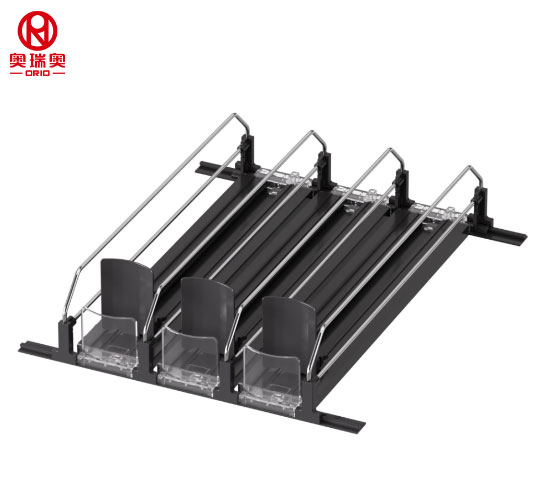
The roller rack solution is a merchandise display system designed with built-in rollers or low-friction tracks that automatically move products forward when customers take them from the rack. Unlike relying solely on gravity through steep slopes, roller racks utilize a smooth rolling mechanism that enables products to move smoothly and reliably, even for heavy or irregularly shaped merchandise.
The main components include: · Roller track: low-friction rolling strips or rollers that enable the product to slide smoothly.
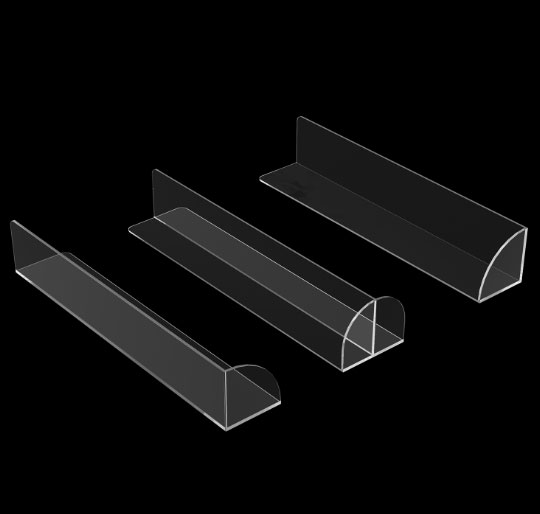
Adjustable divider: It keeps the products separated and aligned, facilitating organization.
Modular framework: Allows for customization of shelves based on product size and retail category.
Core principle: The product should always face forward, with minimal human intervention, while enhancing visibility and accessibility for shoppers.
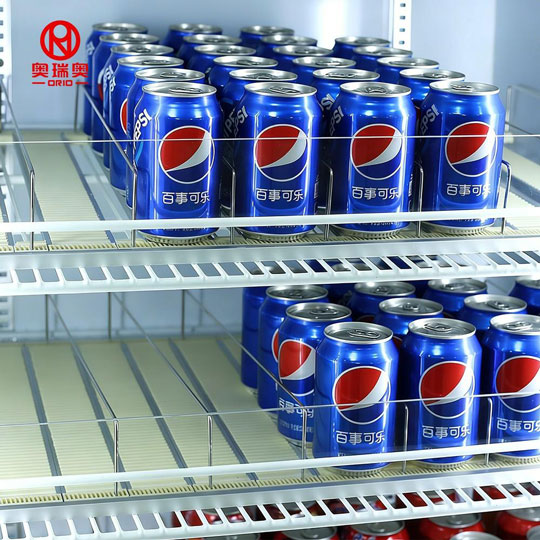
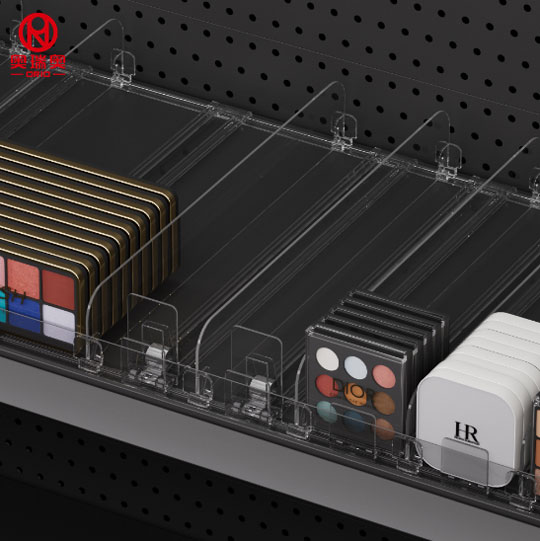
Consistently presenting the product in a positive light - ensuring the front of the product maintains perfect alignment at all times, enhancing visibility and encouraging impulsive purchases.
Faster restocking - Employees can easily load items from the rear, saving a significant amount of labor time.
Reduce product damage and loss - Smooth rolling action can prevent crushing, jamming, or unnecessary handling.
Improving space utilization - Achieving higher product density through neatly arranged goods, thereby optimizing every inch of space on the shelves.
Enhancing customer experience - Shoppers can easily find products without having to search, improving convenience and satisfaction.
Diverse and applicable product types - From bottled, cartoned to canned, boxed, roller racks can accommodate a variety of packaging formats.
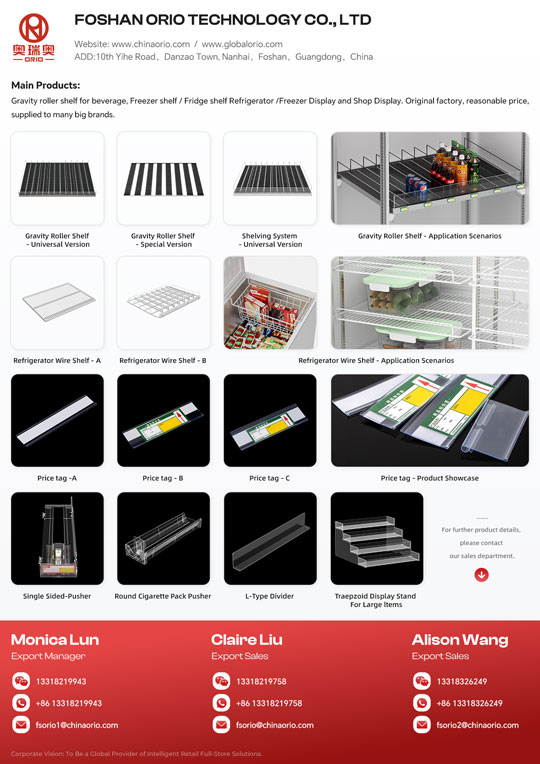
5.Supermarket Application Scenario
The roller rack system shines in different areas of the supermarket, where each area has unique requirements for product display and replenishment.
Meat display area with rolling racks · Ensure neatly arranged packaged meat to avoid clutter.
Strengthen the organization of refrigerated cabinets and improve the efficiency of replenishment.
It helps to consistently present fresh products to customers.
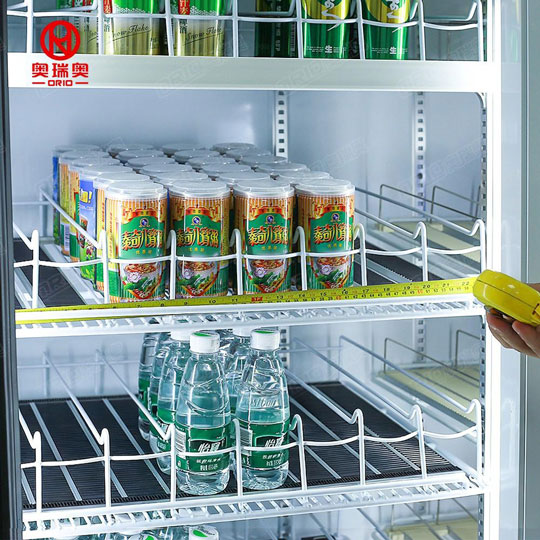
The beverage display area, equipped with roller racks, is ideal for showcasing bottled water, soda, juice, and energy drinks.
Ensure that products are always neatly arranged and easily accessible.
Enhance visual appeal to make it easier for customers to make choices.
The display area for boxed milk is equipped with store display racks featuring gravity-type roller shelves, with rectangular cartons sliding smoothly on the rollers.
Always maintain a full-screen display of milk and dairy products.
Reduce the workload of employees in keeping the shelves tidy.
6. Comparison of Roller Racking with Other Racking Management Tools
Although roller racking is a powerful tool, it is still important to compare it with other racking management systems:
Rack Pusher: Uses spring-loaded pushers to keep products facing forward. Suitable for lightweight, slow-turnover items, but performs poorly compared to roller racking for heavy or fast-turnover goods.
Shelf divider: It aids in sorting and preventing product mix-ups, but it does not automatically orient items with their front side facing forward.
Roller racking: It is most suitable for high-turnover product categories, where speed, efficiency, and consistent front-of-house display are prioritized considerations.
A balanced strategy typically involves combining these solutions: using dividers for organization, using pushers to transport lightweight items, and using rollers in high-traffic areas.
7. Case Studies and Success Stories
Case Study 1:
Supermarket Beverage Section A major supermarket chain installed roller racks in its beverage aisle. The results showed a 40% improvement in display consistency and a 30% reduction in replenishment time. Customer surveys indicated an increase in satisfaction with product accessibility.
Case Study 2:
Convenience Store Milk Section By introducing wheeled shelves to store boxed milk, the replenishment time has been reduced by nearly half. Store staff report that complaints about disorganized shelves have decreased, and due to better display methods, dairy product sales have increased by 12%.
Case Study 3:
Condiments and Canned Foods A specialty food store has implemented roller racks in its condiment section, ensuring that products are always presented facing forward. This system has reduced product damage and made it easier for customers to find products of specific flavors, thereby increasing the rate of repeat purchases.
Integrated with IoT sensors to track inventory levels in real-time.
Electronic Shelf Label (ESL): Combined with a rolling system, it enables synchronous pricing and promotion.
AI-driven replenishment: Predictive replenishment based on sales data and shelf sensors.
Sustainability: Utilizing environmentally friendly materials and recyclable roller components.
Omnichannel integration: Connect offline shelf displays with online inventory systems to achieve real-time updates.
Why Today's Roller Rack Solutions Matter Roller rack solutions are not merely a display aid; they are a strategic investment in retail efficiency. By keeping merchandise displays always facing forward, they enhance visual appeal, simplify operational processes, and enhance the customer experience.
From meat and dairy products to beverages and canned foods, rolling racks can adapt to various areas of supermarkets, ensuring smooth replenishment and orderly display. As the retail industry continues to develop, rolling racks will continue to be at the forefront of innovation, perfectly integrating practical functions with smart technology. For retailers who want to increase sales, improve efficiency, and provide customers with an excellent experience, rolling rack solutions are not just an option, but the future of rack management.
Keywords: supermarket retail display solutions, shelf management system, shelf roller track, shelf roller, supermarket roller shelf, ORIO display.
 |  |


