



Roller Shelf Solution: Keep Your Retail Display Facing Forward
08 January 2026
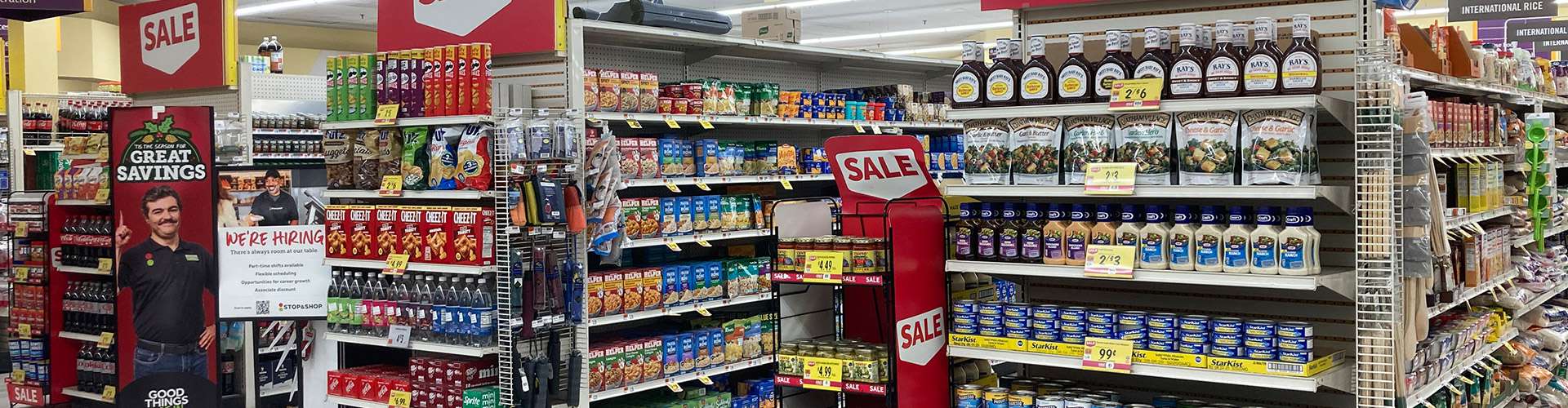


Walk into any supermarket, convenience store, pharmacy, or electronics retailer and you'll see thousands of price labels attached to shelves. Although they are often overlooked, these labels play an important role in helping customers locate products, compare prices, and make purchasing decisions.
For store operators, displaying prices is not simply about printing labels. The real challenge is keeping information accurate while minimizing labor, maintenance, and replacement costs over time.
Today, two solutions dominate the market: reusable Price Tag Holders and traditional Adhesive Labels. Both can display pricing and promotional information, but their impact on store operations can be very different. Before investing in a retail shelf labeling system, it's worth understanding where each option performs best and which one aligns with your operational goals.
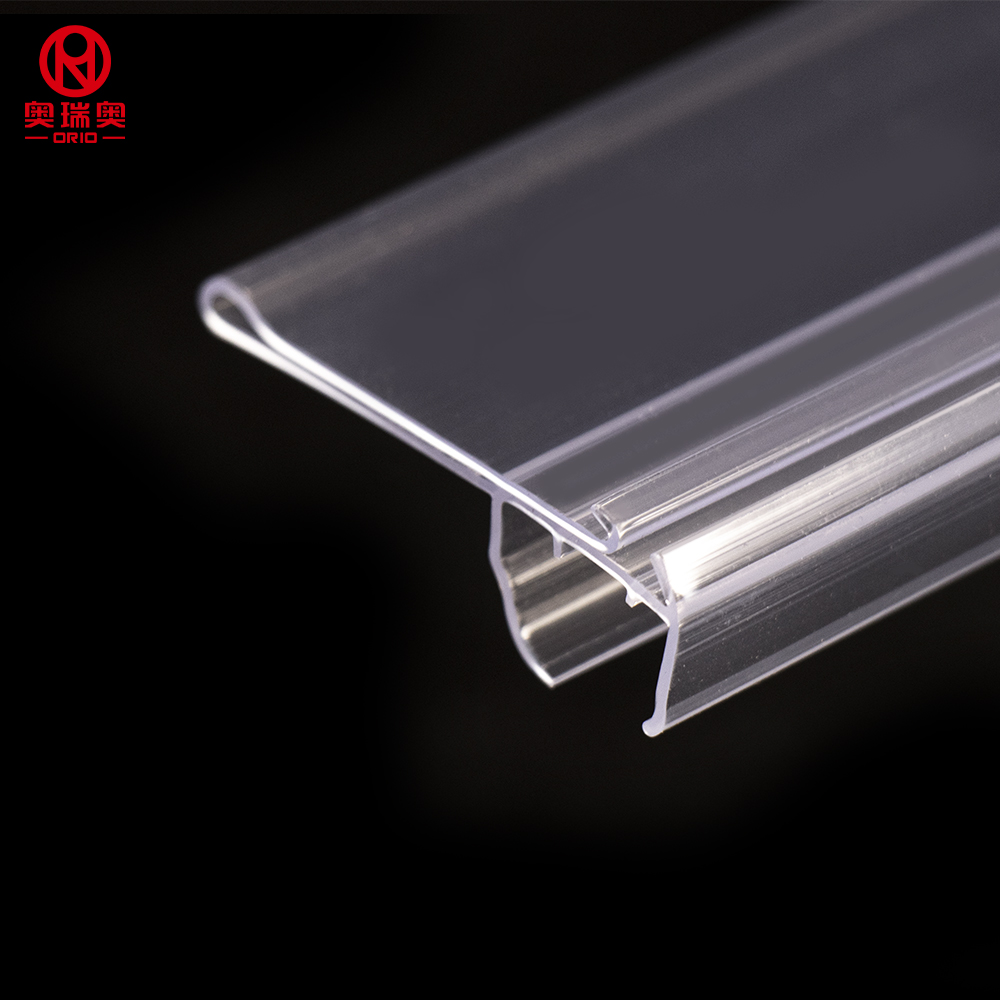
A Price Tag Holder, often referred to as a Shelf Edge Label Holder, Shelf Label Holder, Shelf Data Strip, or Shelf Ticket Holder, is a plastic profile installed along the front edge of retail shelving. It is designed to hold price tags, barcode labels, promotional inserts, and product information securely in place.
Unlike adhesive stickers that are applied directly to shelf surfaces, a shelf-edge pricing system allows labels to be updated without scraping off residue or replacing the entire display component.
Creates a consistent shelf appearance
Speeds up price and promotion updates
Supports high-volume SKU management
Reduces label replacement costs
Protects shelf surfaces from adhesive residue
Suitable for long-term retail operations
For this reason, Price Tag Holders have become a standard component in supermarkets, convenience stores, pharmacies, and large retail chains worldwide.
ORIO PVC Reinforced Price Tag Strips-C40
Although both solutions serve the same purpose, they operate in very different ways.
Comparison Factor | Price Tag Holder | Adhesive Labels |
Installation | Installed once | Applied individually |
Label Updates | Quick insert replacement | Remove and reapply |
Shelf Appearance | Uniform and professional | May vary over time |
Reusability | Reusable | Single-use |
Maintenance | Minimal | Frequent cleaning required |
Cold Environment Performance | Better for suitable materials | Adhesive may weaken |
Long-Term Cost | Lower | Higher |
Multi-Store Rollout | Easier to standardize | More labor-intensive |
For a retailer managing hundreds or thousands of products, even small differences in efficiency can translate into significant labor savings over time.
When comparing solutions, many buyers focus on the initial cost. However, retail operators often discover that maintenance and labor expenses have a much greater impact on long-term budgets.
Cost Category | Price Tag Holder | Adhesive Labels |
Initial Investment | Higher | Lower |
Replacement Frequency | Low | High |
Labor Requirement | Low | High |
Cleaning & Maintenance | Low | Moderate to High |
Three-Year Ownership Cost | Lower | Higher |
A reusable shelf labeling system generally requires a larger upfront investment, but operating costs tend to decrease significantly over time.
For short-term projects, however, adhesive labels may still be the more economical option.
Durability becomes especially important in busy retail environments where labels are frequently updated.
Product Type | Typical Lifespan |
Standard Adhesive Labels | 1–6 months |
Premium Adhesive Labels | 6–12 months |
PVC Shelf Label Holder | 3–5 years |
PET Shelf Edge Label Holder | 5+ years |
Acrylic Shelf Data Strip | 5+ years |
Environmental conditions such as humidity, UV exposure, cleaning chemicals, and temperature fluctuations can influence actual service life.
In most permanent retail installations, reusable shelf label holders significantly outlast adhesive alternatives.
Choosing the right Shelf Label Holder requires more than selecting a suitable label height. The profile must match the shelf structure, label size, installation method, and operating environment.
Before placing an order, retailers and fixture suppliers should evaluate the following factors.
Measure the shelf edge thickness, installation channel, slot width, slot depth, and available label height. Even small dimensional differences can affect installation and label retention.
Determine whether the holder will be installed on metal gondola shelving, wire shelving, glass shelves, wooden shelves, refrigerated shelving, or another fixture system. Different shelf constructions may require different mounting structures.
Shelf Type | Key Consideration | Common Application |
Metal Gondola Shelving | Shelf edge profile and channel dimensions | Supermarkets, pharmacies, convenience stores |
Wire Shelving | Clip-on or profile mounting compatibility | Convenience stores, storage and display areas |
Glass Shelving | Mounting method and visual appearance | Electronics, cosmetics, specialty retail |
Wooden Shelving | Edge thickness and attachment method | Specialty stores, furniture and premium retail |
Refrigerated Shelving | Low-temperature and moisture resistance | Dairy, beverage, fresh food displays |
Freezer Shelving | Cold-temperature performance and condensation | Frozen food and supermarket freezers |
Shelf label holders are not universally interchangeable between shelving systems. Before selecting a profile, confirm the shelf edge geometry, mounting method, label dimensions, and operating environment.
Choose PVC, PET, acrylic, or another material according to the required flexibility, transparency, durability, temperature resistance, and appearance.
For refrigerated and freezer displays, pay particular attention to low temperatures, condensation, moisture, cleaning chemicals, and repeated handling. Material and profile design should be selected accordingly.
Check the required label height, insert thickness, barcode visibility, viewing angle, and available space on the shelf edge. The holder should securely retain the label without obstructing important product information.
For large retail projects or customized profiles, requesting samples before mass production is recommended. Providing shelf drawings, dimensions, photographs, or physical samples can help suppliers verify compatibility and reduce installation problems.
One of the most common causes of installation problems is selecting a profile that doesn't match the shelving system.
Before ordering a Shelf Edge Label Holder, it is advisable to verify several key dimensions.
Shelf manufacturer and model
Shelf edge thickness
Slot width
Slot depth
Label height
Existing pricing channel specifications
Measurement | Description |
Shelf Edge Thickness | Thickness of shelf front edge |
Slot Width | Width of installation channel |
Slot Depth | Depth of installation channel |
Label Height | Visible ticket height |
For chain retailers and fixture suppliers, requesting samples before mass production can help avoid costly installation issues.
For customized or large-volume projects, buyers can provide shelf drawings, photographs, CAD files, or physical samples to the manufacturer for compatibility assessment.
【explore our PVC Price Tag Holders】
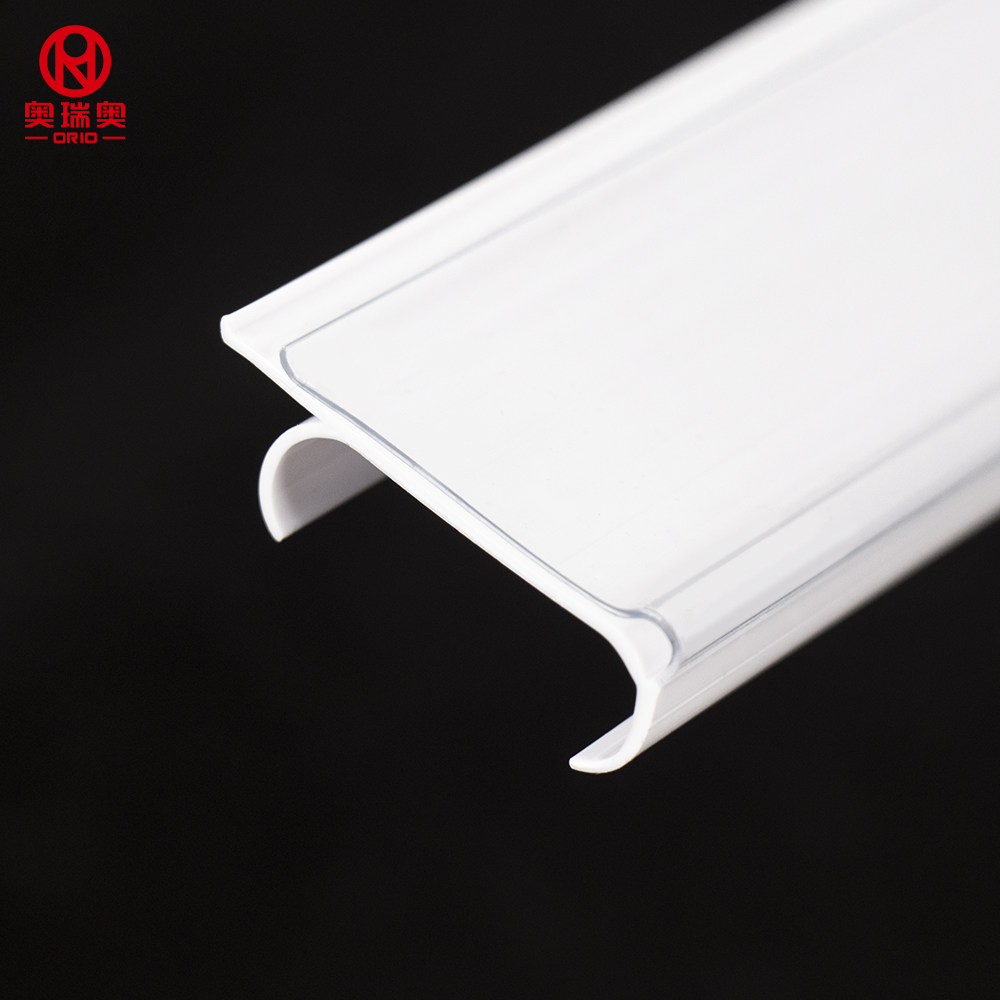
ORIO PVC Plastic Price Tag Holder-U40
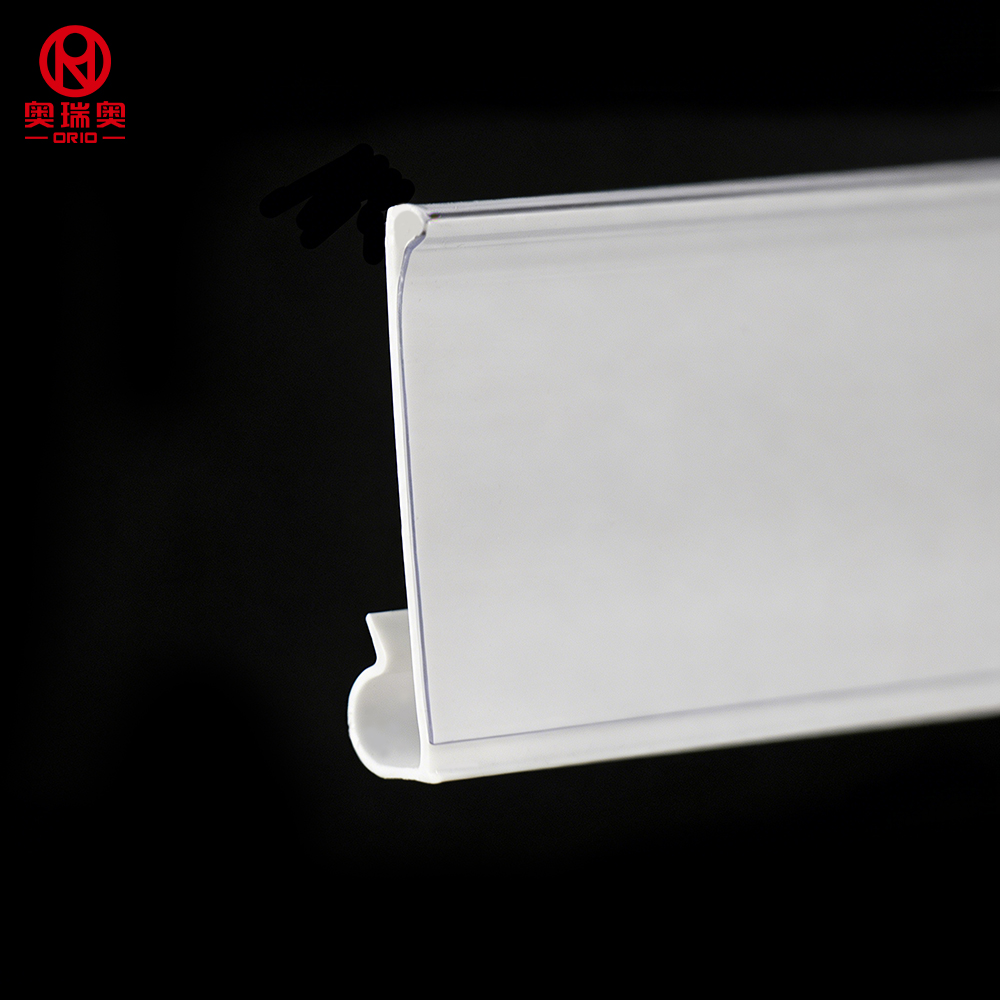
How to Choose the Right Material: PVC vs PET vs Acrylic
Shelf label holders are available in different materials, and the right choice depends on the application environment, required durability, appearance, and budget. The three commonly used options include PVC, PET, and acrylic.
Material | Key Advantages | Typical Applications | Considerations |
PVC | Flexible, cost-effective, easy to process | General retail shelving, supermarkets, convenience stores | Material grade should be selected according to temperature and durability requirements |
PET | Good clarity, dimensional stability, and durability | Premium retail displays, refrigerated applications, long-term installations | May have a higher material cost than standard PVC |
Acrylic | High transparency and premium appearance | High-end retail displays, specialty merchandising | Less flexible than PVC and may require more careful handling |
For most standard retail applications, PVC provides a practical balance between cost and performance. PET may be preferred when greater clarity, dimensional stability, or durability is required, while acrylic is often selected when visual appearance and transparency are major considerations.
Material selection should also take into account temperature, humidity, UV exposure, cleaning chemicals, mechanical impact, and the expected service environment.
A convenience store may update hundreds of prices every month. A supermarket may update thousands.
In these environments, efficiency matters.
With a reusable Shelf Ticket Holder, employees simply remove an old insert and slide in a new one. The process typically takes only a few seconds.
Adhesive labels require a different workflow:
Remove the old label
Clean residual adhesive
Print a replacement
Reapply the new label
As SKU counts increase, these extra steps can consume a considerable amount of staff time.
A supermarket operating 10,000 SKUs and updating 20% of pricing monthly could spend hundreds of labor hours each year managing shelf labels.
This is one reason many large retailers invest in permanent shelf-edge pricing systems.
Cold-chain merchandising presents challenges that are rarely encountered in standard retail environments.
Condensation, moisture, low temperatures, and frequent cleaning can quickly expose weaknesses in a labeling system.
Peeling corners
Curling edges
Reduced readability
Residue buildup
Frequent replacement
Feature | Benefit |
Moisture Resistance | Better durability in humid environments |
Low-Temperature Performance | Reduced cracking risk |
UV Resistance | Longer visual clarity |
Chemical Resistance | Handles routine cleaning |
Structural Stability | Maintains appearance over time |
For beverage coolers, dairy cabinets, and freezer displays, specialized Refrigerator Shelf Label Holders and Freezer Shelf Label Holders are often the preferred solution.
A fair comparison should acknowledge that adhesive labels remain useful in certain retail scenarios.
Not every store requires a permanent shelf labeling system.
Scenario | Reason |
Temporary Promotions | Short usage period |
Pop-Up Stores | Fast installation |
Seasonal Campaigns | Frequent layout changes |
Small Retail Shops | Lower SKU volume |
One-Time Displays | Lower initial investment |
Examples include:
Christmas promotions
Back-to-school campaigns
Product launch displays
Seasonal merchandising programs
For short-term applications, adhesive labels can provide a practical and cost-effective solution.
Purchase price tells only part of the story.
Retail operators should also consider labor, maintenance, replacement frequency, and operational efficiency.
Store Profile:
3,000 SKUs
15% monthly price changes
Three-year evaluation period
Cost Factor | Price Tag Holder | Adhesive Labels |
Initial Cost | Higher | Lower |
Labor Expense | Lower | Higher |
Label Consumption | Lower | Higher |
Maintenance Cost | Lower | Higher |
Long-Term ROI | Higher | Moderate |
For retailers with frequent pricing updates, the savings generated through reduced labor often offset the higher initial investment.
The right choice depends on how your store operates.
Requirement | Recommended Solution |
More than 1,000 SKUs | Price Tag Holder |
Frequent Price Changes | Price Tag Holder |
Chain Store Operations | Price Tag Holder |
Refrigerated Displays | Price Tag Holder |
Long-Term Store Use | Price Tag Holder |
Temporary Promotions | Adhesive Labels |
Pop-Up Stores | Adhesive Labels |
Seasonal Displays | Adhesive Labels |
Very Limited Budget | Adhesive Labels |
Minimal Price Changes | Adhesive Labels |
Choose a Price Tag Holder if:
✔ Product information changes regularly
✔ Store consistency is important
✔ Long-term operating efficiency matters
Choose Adhesive Labels if:
✔ The display is temporary
✔ Budget is the primary concern
✔ Label replacement is infrequent
Regardless of which labeling solution is selected, manufacturing quality can directly affect performance.
Poor dimensional control, inconsistent raw materials, or weak environmental resistance often lead to premature replacement and installation problems.
When evaluating a supplier, buyers typically consider:
Extrusion precision
Material consistency
Environmental testing capability
Delivery reliability
All products comply with EU RoHS standards and can be manufactured using recycled or food-grade materials.
There is no single labeling solution that works for every retail environment.
A neighborhood convenience store running weekly promotions may prioritize speed and ease of replacement. A supermarket chain managing thousands of SKUs may focus more on consistency, labor efficiency, and long-term operating costs. Meanwhile, seasonal displays and pop-up stores often require maximum flexibility with minimal upfront investment.
The key is to evaluate the entire lifecycle of the labeling system rather than comparing purchase prices alone. When factors such as maintenance, labor, durability, shelf appearance, and operating efficiency are considered together, the most suitable option often becomes much clearer.
For many permanent retail installations, reusable Price Tag Holders, Shelf Edge Label Holders, and Shelf Data Strips offer long-term advantages. For temporary merchandising projects, Adhesive Labels remain a practical and cost-effective alternative.
The best choice ultimately depends on the specific requirements of your retail environment.
For retailers and fixture suppliers looking for a reliable shelf labeling solution, working with an experienced Price Tag Holder Manufacturer can help ensure consistent quality, dimensional accuracy, customization support, and long-term value.
Whether you need a standard profile or a customized shelf label holder, we can help you evaluate dimensions, materials, mounting structures, and application requirements.
A Price Tag Holder is a reusable shelf-edge display component that allows labels to be replaced quickly. Adhesive labels must be removed and reapplied whenever information changes.
Most supermarkets prefer Shelf Edge Label Holders because they simplify price updates and support large SKU volumes.
Yes, but they may peel, curl, or lose adhesion when exposed to moisture and low temperatures for extended periods.
High-quality PVC Shelf Label Holders commonly last 3–5 years, while PET and Acrylic versions may remain in service even longer.
The most accurate approach is to provide shelf dimensions, technical drawings, or physical samples for compatibility testing.
Adhesive labels are often the better choice for temporary promotions, seasonal displays, pop-up stores, and short-term merchandising projects.
Yes. Most professional manufacturers offer customization options for dimensions, materials, colors, structures, and packaging.
For retailers with frequent pricing updates and long-term operations, reusable Price Tag Holders generally provide a stronger ROI by reducing labor, maintenance, and replacement costs over time.


