



Roller Shelf Solution: Keep Your Retail Display Facing Forward
08 January 2026



In convenience stores, supermarkets, tobacco shops, and other retail environments, cigarette packs are often displayed in dedicated cabinets or behind checkout counters. Because these products are frequently purchased throughout the day, keeping every pack neatly aligned and visible can require repeated manual adjustment.
When a customer removes a cigarette pack, gaps can appear on the shelf. The remaining products may move backward, become misaligned, or lose their front-facing position. For stores with many SKUs and high sales volumes, maintaining an organized cigarette display can increase routine shelf-maintenance work.
A cigarette pusher, also known as a cigarette shelf pusher or tobacco pusher, provides a simple mechanical solution. By automatically moving the remaining products toward the front of the shelf, a cigarette pusher helps maintain product visibility and a consistent display with less manual adjustment.
A cigarette pusher is a spring-loaded merchandising device designed to keep cigarette packs organized and automatically advance them toward the front of a retail shelf.
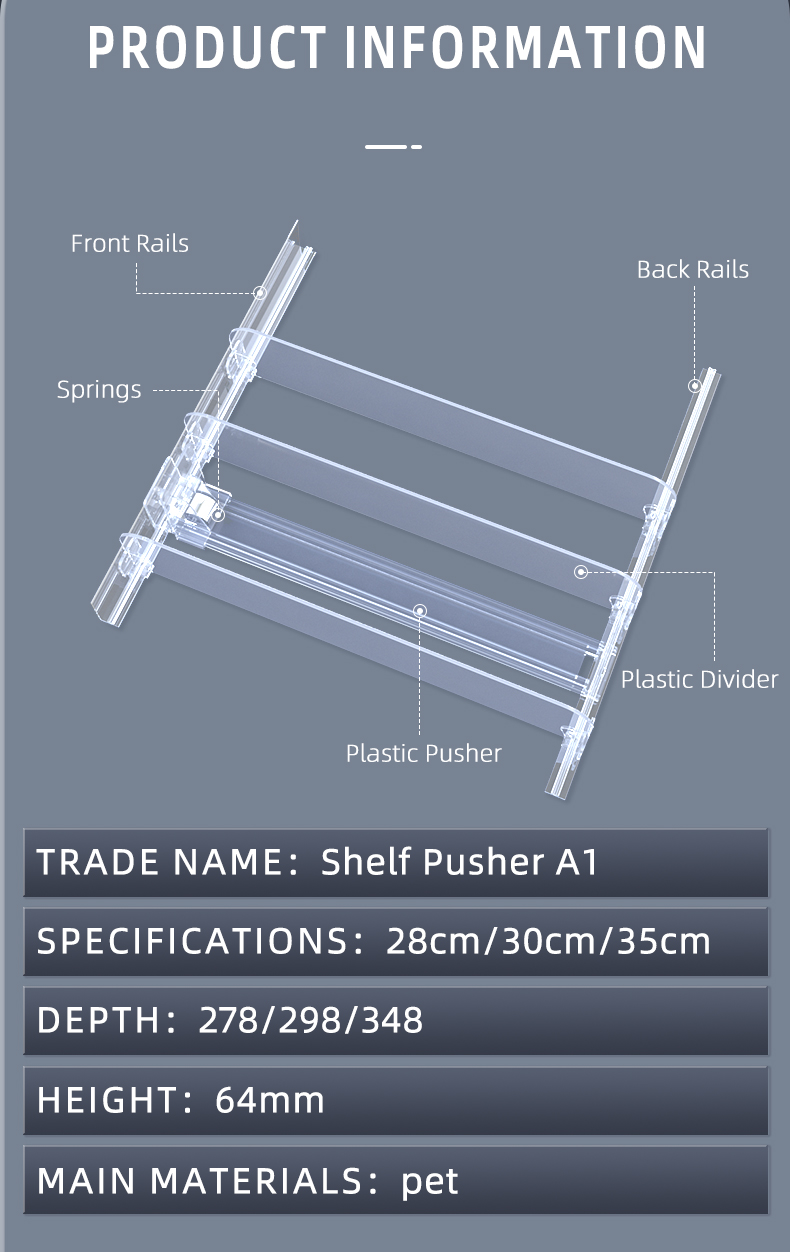
A typical cigarette pusher system may include:
· A pusher tray or front pusher
· A guide track or channel
· A spring mechanism
· Product separation or guiding components
The pusher is installed within an individual product channel. When the front cigarette pack is removed, the spring mechanism pushes the remaining packs forward.
In simple terms, a cigarette pusher turns a conventional shelf into a more organized front-facing product display system.
Depending on the design, cigarette pushers can be configured for different cabinet dimensions, cigarette pack sizes, product quantities, and retail display layouts.
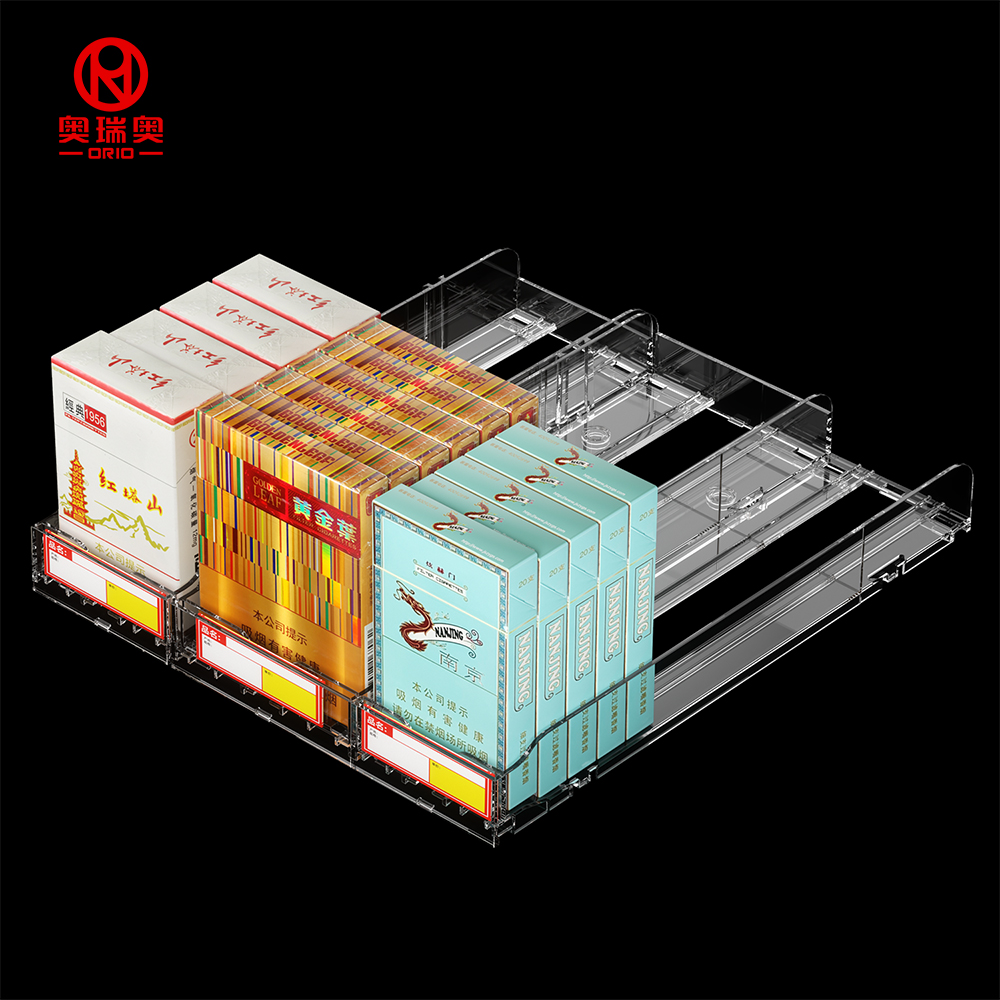
Each cigarette pusher creates a dedicated channel for a group of cigarette packs.
When a customer takes the product at the front, the spring-loaded mechanism moves the remaining packs forward. This allows the next pack to move into the selling position automatically.
Unlike powered merchandising systems, most standard cigarette pushers operate without electricity. Their movement relies on mechanical spring force.
Without a pusher system, cigarette packs can gradually move toward the back of a shelf as products are sold. Staff may then need to manually pull the products forward and realign them.
A cigarette pusher keeps the products under controlled forward pressure, helping maintain a consistent front-facing position throughout the day.
A cigarette display may contain numerous brands and SKUs. Individual pusher channels help separate products and keep each SKU in its designated position.
This can make the display easier to organize, restock, and maintain.
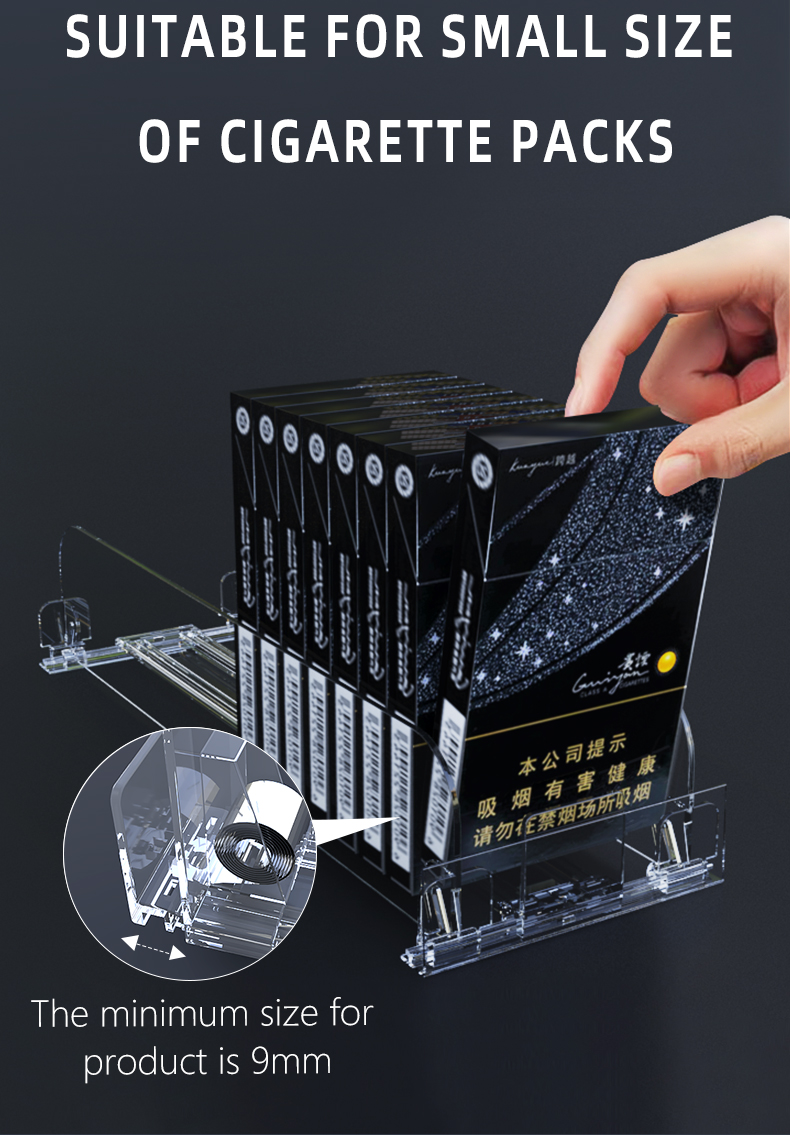
In high-traffic retail stores, employees may need to repeatedly move cigarette packs toward the front of the cabinet.
A cigarette pusher performs this movement automatically, reducing repetitive shelf-facing work.
It does not eliminate all shelf maintenance, but it can reduce the frequency of manual product adjustment.
On a conventional flat shelf, products can gradually move backward as inventory decreases.
This may make products less visible and less convenient for customers or employees to access.
A pusher keeps remaining products under forward pressure so that they stay closer to the front of the display.
Front-facing products are generally easier to identify and access.
By maintaining a more consistent product position, cigarette pushers can help retailers keep brand and SKU displays organized throughout the business day.
Individual channels can help prevent different cigarette brands or product variants from mixing together.
This is particularly useful for cigarette cabinets containing a large number of SKUs in a relatively small display area.
A properly configured pusher channel provides a defined space for each product group.
During replenishment, employees can add products behind the existing stock and allow the spring mechanism to maintain forward positioning.
A conventional shelf provides a basic storage and display surface, but it does not automatically move products toward the front.
A cigarette pusher adds an active mechanical merchandising function.
Feature | Traditional Shelf | Cigarette Pusher |
Product front-facing | Manual | Automatic |
Product positioning | May move backward | Maintained toward the front |
Shelf organization | Requires regular adjustment | More consistent |
SKU separation | Depends on shelf layout | Individual channels |
Staff shelf-facing work | Higher | Reduced |
Electricity required | No | Usually no |
Product replenishment | Manual positioning | Guided by the pusher channel |
For retailers that need consistent product presentation and frequent product replenishment, a cigarette pusher can provide a more organized alternative to a basic flat shelf.

Different cigarette display applications may require different pusher designs. ORIO offers several cigarette pusher solutions designed for different product configurations, display layouts, and merchandising requirements.
A Split Pusher is designed to organize products within separated channels, helping maintain clear product positioning on cigarette display shelves.
This type of pusher can be useful for displays containing multiple cigarette SKUs, where maintaining separation between product groups is important.
When choosing a split pusher, retailers should consider the available shelf width, product dimensions, and required channel configuration.
A Counting Cigarette Pusher combines product-pushing functionality with a counting feature, making it suitable for retail environments where inventory visibility is an important consideration.
By helping retailers identify the number of products remaining in a display channel, this type of pusher can support more convenient stock monitoring and replenishment.
It can be particularly useful for cigarette displays with multiple SKUs or stores that need to monitor product quantities more efficiently.
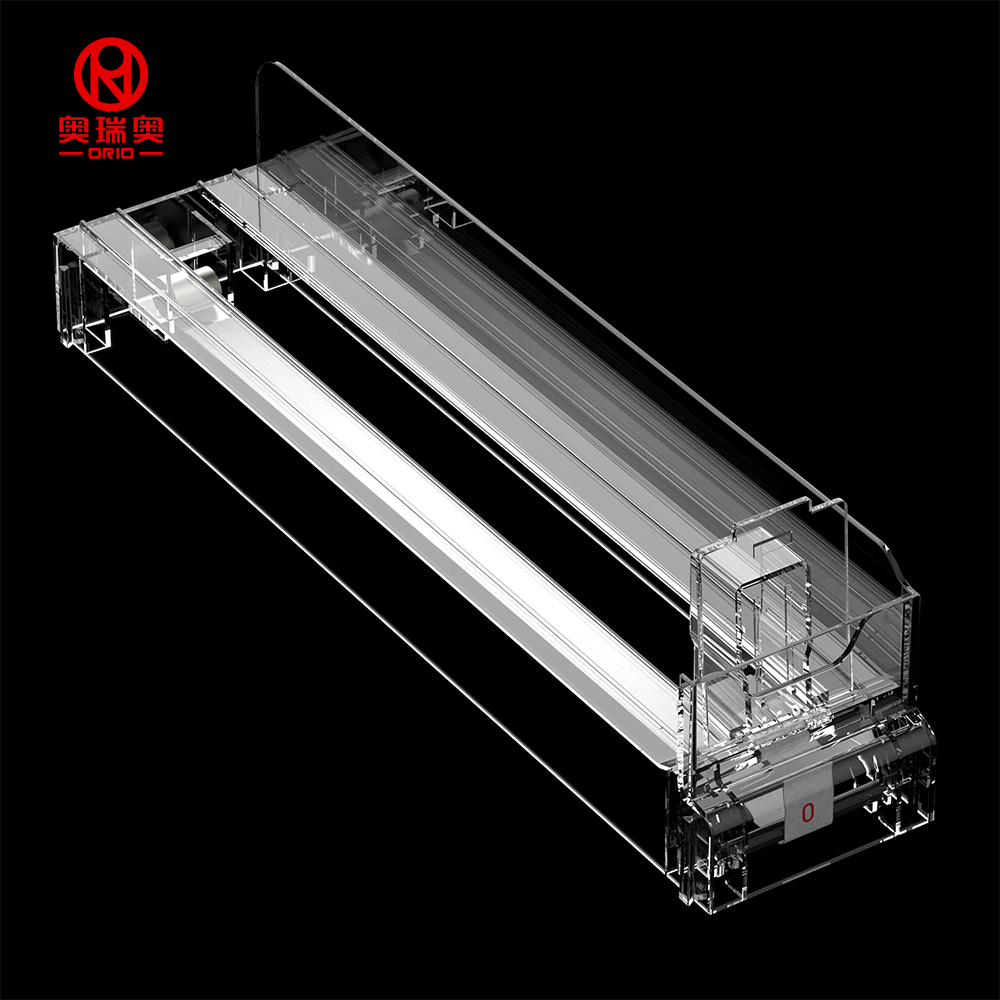
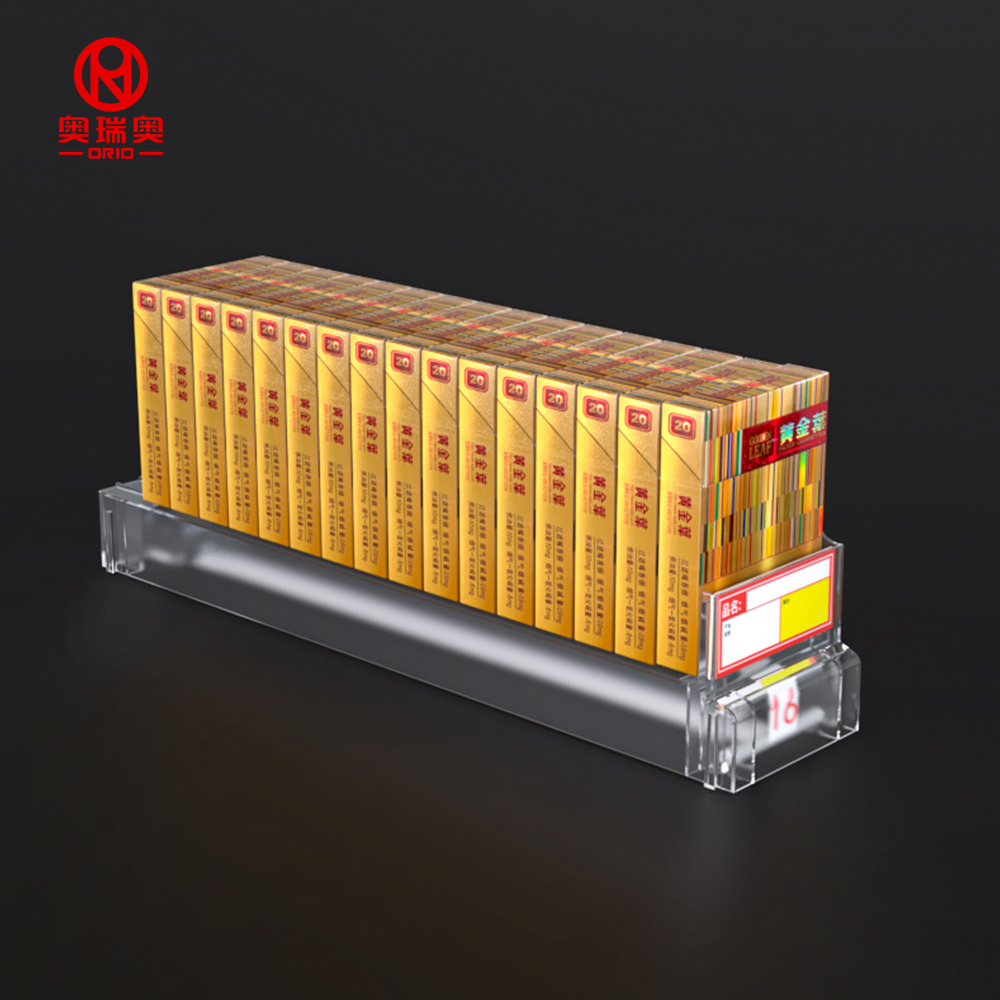
The standard Cigarette Pusher is designed to automatically move cigarette packs toward the front of the display as products are removed.
It provides a simple mechanical solution for maintaining product alignment and reducing manual shelf-facing work.
This type of pusher can be considered for conventional cigarette display cabinets where standard product dimensions and shelf configurations are used.
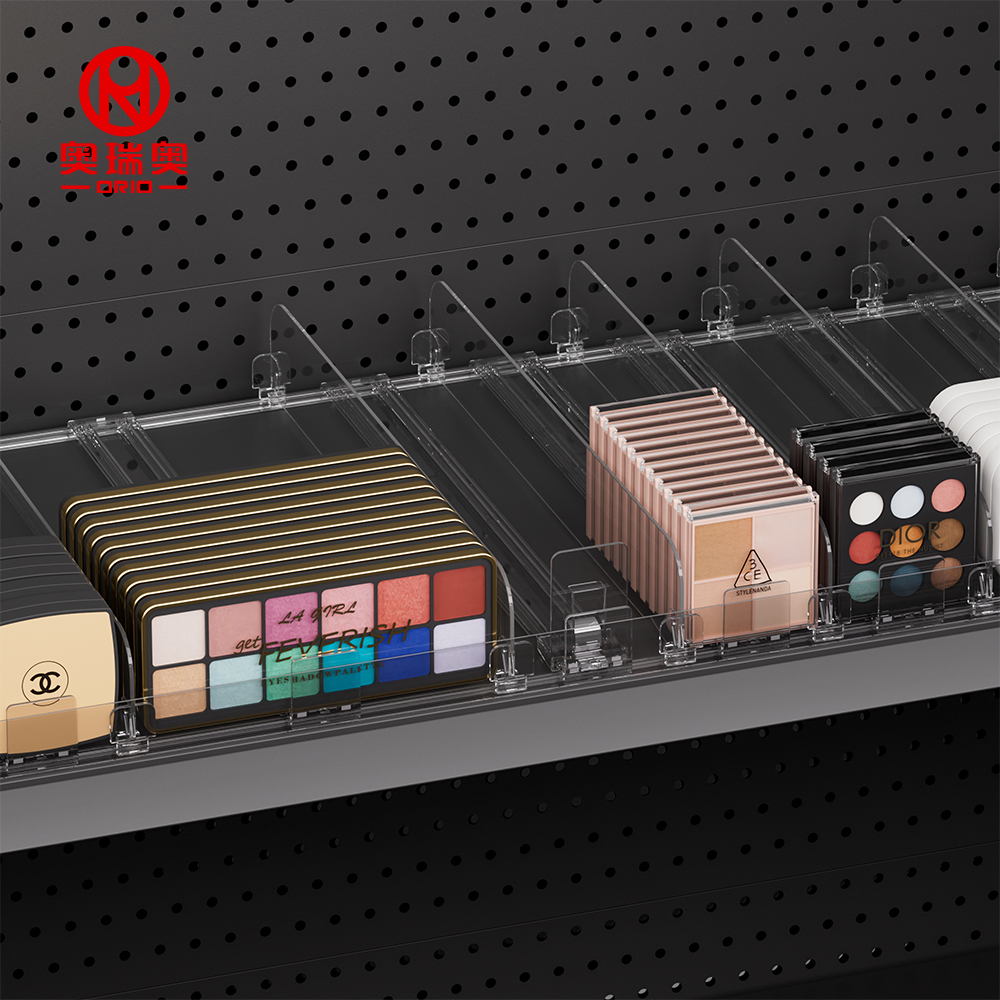
A Borderless Pusher uses an open or minimal-side structure to help maintain product positioning while providing a less obstructed display appearance.
Compared with designs with more visible side structures, a borderless configuration can help create a cleaner visual presentation and make the products easier to see.
It can be considered when both product organization and display visibility are important.
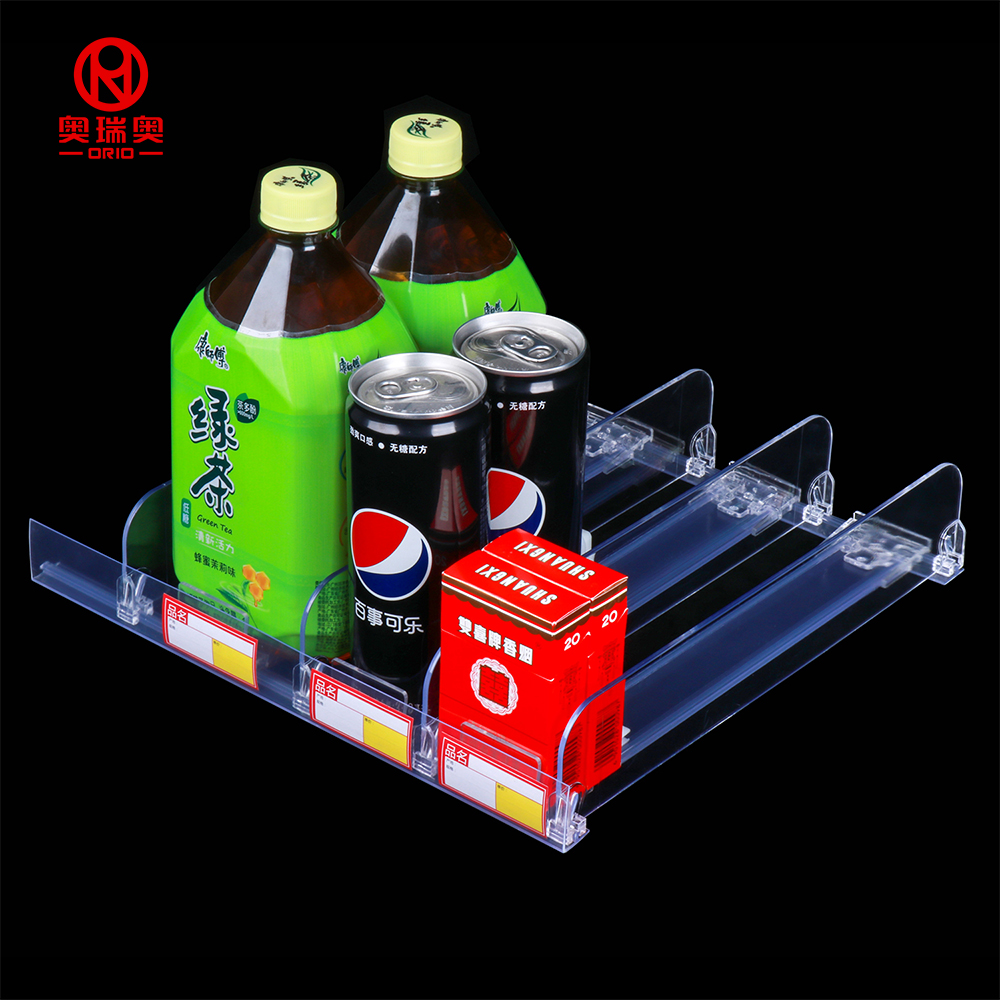
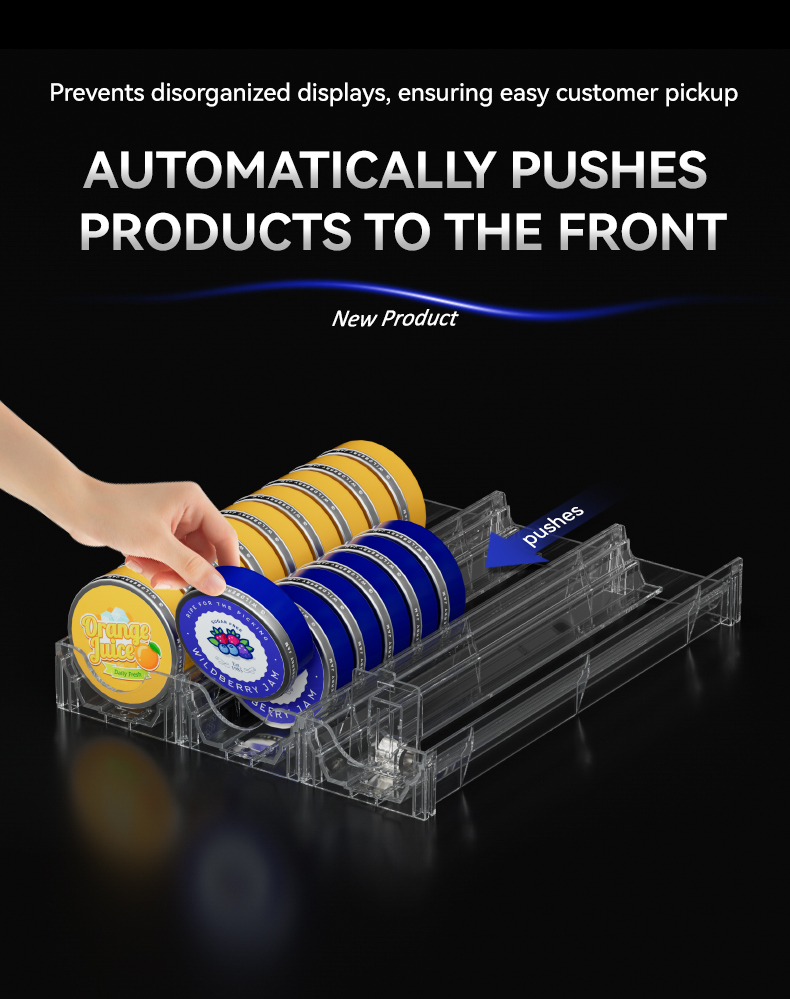
A Round Box Pusher is designed for products with round or cylindrical packaging that may not be suitable for conventional flat-pack cigarette pushers.
Its specialized structure helps guide products forward while maintaining more stable positioning within the display.
Before selecting a round box pusher, retailers should verify the product shape, dimensions, and cabinet configuration to ensure compatibility.
For large retail projects, standard products may not always fit the existing cabinet or display configuration.
Customized cigarette pusher solutions may involve:
· Custom channel dimensions
· Different track lengths
· Customized materials
· Different spring configurations
· Special installation structures
· Custom display layouts
· Branding or packaging requirements
For OEM and retail fixture projects, customization can be particularly useful when the pusher needs to be integrated into an existing cigarette display cabinet.
The right cigarette pusher depends not only on cigarette pack dimensions but also on the display structure, product shape, inventory requirements, and merchandising objectives. Retailers should evaluate both the physical compatibility and the functional requirements before selecting a pusher.
Selecting a cigarette pusher based only on price or appearance can lead to compatibility problems. The product dimensions, shelf structure, and spring mechanism should all be considered before ordering.
Different cigarette products may have different package dimensions.
Before selecting a pusher, measure the actual:
· Product width
· Product height
· Product depth
The channel should provide enough space for smooth movement without allowing excessive lateral movement.
The pusher track needs to match the available shelf depth.
A track that is too long may not fit correctly, while a track that is too short may not provide the desired product capacity.
For this reason, retailers should measure the usable depth of the cabinet rather than relying only on the nominal cabinet size.
Channel width is one of the most important dimensions when selecting a cigarette shelf pusher.
The channel should be wide enough to allow products to move smoothly while keeping them properly aligned.
If the channel is too narrow, products may become difficult to move. If it is too wide, products may tilt or shift sideways.
Spring force affects how smoothly products advance toward the front.
If the force is insufficient, the remaining products may not move forward consistently.
If the force is excessive, it may create unnecessary pressure on the products and make dispensing less smooth.
The spring should therefore be matched to the product weight, channel length, and number of products in the channel.
Stores with a large number of cigarette SKUs may benefit from individual pusher channels to keep different products separated. Product quantity per channel should also be considered, especially when selecting the appropriate track length and spring configuration.
For stores with frequently changing assortments, adjustable or modular solutions can provide greater flexibility.
Before ordering, confirm how the pusher will be installed in the existing cabinet.
Depending on the design, installation may involve different mounting or fixing methods.
Compatibility with the existing shelf structure should be checked in advance to avoid unnecessary modifications.
The material of a cigarette pusher can affect durability, appearance, weight, and long-term performance.
For retail applications, the selected material should be suitable for repeated product movement and daily handling.
The right material also depends on whether the priority is:
· Cost efficiency
· Durability
· Transparency
· Appearance
· Lightweight construction
· Long-term commercial use
Display Requirement | Suitable Pusher |
Standard cigarette pack display | Cigarette Pusher |
Need product separation between channels | Split Pusher |
Need product counting or stock visibility | Counting Cigarette Pusher |
Want a more open display appearance | Borderless Pusher |
Displaying round or cylindrical packaging | Round Box Pusher |
The most suitable cigarette pusher depends on the product being displayed, cabinet structure, merchandising requirements, and desired level of inventory visibility. For customized retail projects, the pusher design can also be evaluated based on product dimensions and the existing display configuration.
Accurate measurements can help prevent compatibility problems when purchasing cigarette pushers.
Before placing an order, measure the following:
Product dimensions
Measure the width, height, and depth of the cigarette pack that will be displayed.
Shelf depth
Measure the usable front-to-back depth of the cabinet or shelf.
Available channel width
Determine how much horizontal space is available for each product channel.
Product capacity
Estimate how many packs should be stored in each channel.
Existing cabinet structure
Check whether the cabinet has existing dividers, rails, slots, or other structures that could affect installation.
For customized projects, providing cabinet drawings, product dimensions, photos, or samples can also help the manufacturer evaluate compatibility and develop a suitable pusher configuration.
Cigarette pushers can be used in a variety of retail environments where cigarette products are displayed in dedicated shelving or cabinets.
Convenience stores typically need to manage many SKUs within a limited display area. Cigarette pushers can help maintain organized product channels while reducing repetitive shelf-facing work.
Supermarkets may use dedicated tobacco display areas or checkout-counter cabinets. A pusher system can help maintain consistent product positioning throughout the day.
Tobacco retailers often carry a wider range of products and brands. Adjustable or customized pusher systems can provide greater flexibility for different product assortments.
Gas station stores often operate in high-traffic environments where quick product access and efficient shelf maintenance are important.
For display cabinet manufacturers, cigarette pushers can be integrated into new cabinet designs or customized for existing retail fixtures.
Retail projects do not always use standardized cabinet dimensions. For this reason, OEM or customized cigarette pusher solutions may be considered for retail chains, display fixture manufacturers, and specialized tobacco display projects.
Depending on the manufacturer and project requirements, customization may include:
· Pusher dimensions
· Channel width
· Track length
· Product capacity
· Spring force
· Material selection
· Installation structure
· Color or appearance
· Packaging
· Custom branding
When requesting a quotation, it is useful to provide the cigarette pack dimensions, shelf dimensions, required quantity, cabinet drawings, and intended application.
This information allows the manufacturer to recommend a more suitable cigarette pusher configuration rather than simply supplying a standard size.
A cigarette pusher is a simple but practical merchandising component designed to keep cigarette packs organized and positioned toward the front of a retail display.
By automatically advancing products as they are removed, a cigarette shelf pusher can help reduce repetitive shelf-facing work, improve product visibility, maintain SKU separation, and create a more consistent display.
When selecting a cigarette pusher, retailers and display manufacturers should look beyond the basic product type. Product dimensions, shelf depth, channel width, spring force, installation method, material, product capacity, and customization requirements can all affect the suitability of a pusher system.
Looking for a cigarette pusher for your retail display project? ORIO provides cigarette display and shelf organization solutions for different cabinet configurations and product requirements. Contact us to discuss your application and customization needs.
In many cases, yes. However, compatibility depends on the cabinet dimensions, shelf depth, mounting structure, and product dimensions. Measuring the existing cabinet before ordering is recommended.
Yes, provided that the pusher channel dimensions are compatible with the cigarette packs. Adjustable or customized designs may be more suitable when a cabinet contains products with different dimensions.
An adjustable cigarette pusher can accommodate different product widths or changing product assortments. This makes it useful for stores that carry multiple SKUs.
The required spring force depends on factors such as product weight, channel length, and the number of products in the channel. The spring should provide sufficient forward movement without creating excessive pressure.
Standard mechanical cigarette pushers generally require limited maintenance. Regular cleaning of the track and checking for damaged or obstructed components can help maintain smooth product movement.
Many manufacturers offer customized solutions for specific cabinet dimensions, channel sizes, materials, spring configurations, and installation requirements. Customization is particularly useful for OEM retail fixture projects.
The right type depends on the product and display requirements. A standard Cigarette Pusher may be suitable for conventional cigarette packs, while a Split Pusher can help separate products, a Counting Cigarette Pusher can support stock monitoring, a Borderless Pusher can provide a more open display appearance, and a Round Box Pusher can be considered for compatible round or cylindrical packaging.
A shelf divider primarily separates different products or SKUs. A cigarette pusher performs both product organization and forward product advancement. In many retail applications, the two functions can be combined in a merchandising system.
The basic pusher principle can also be applied to other packaged retail products, provided that the product dimensions, weight, and packaging are suitable for the pusher mechanism. The exact application should be evaluated based on the product and shelf configuration.


