



Roller Shelf Solution: Keep Your Retail Display Facing Forward
08 January 2026
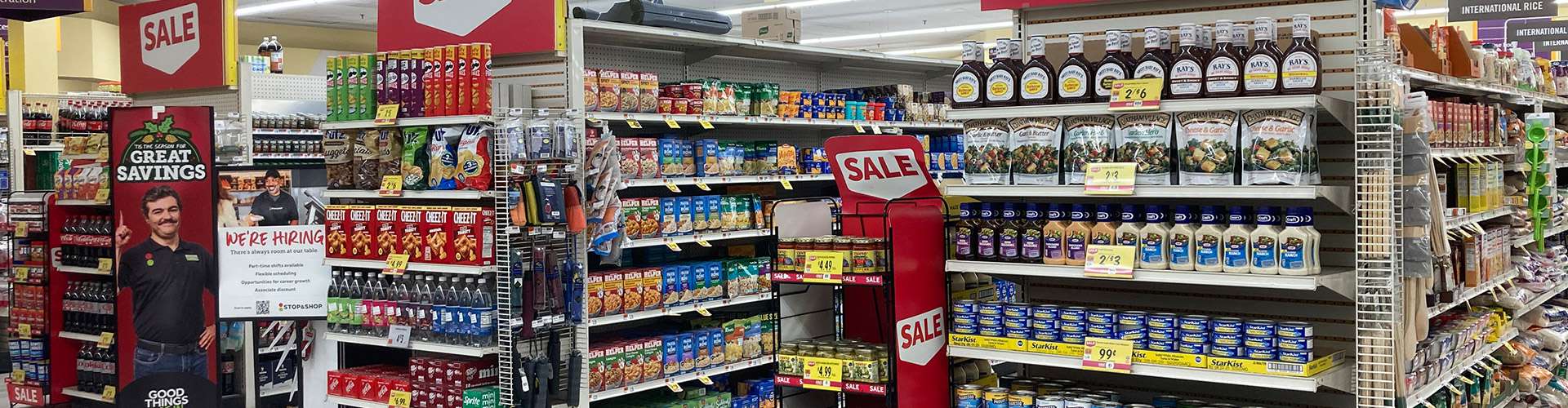


Price tag holders may be small components of a retail shelving system, but their performance can directly affect price visibility, shelf organization, and store presentation. A poorly fitted or low-quality holder can become loose, crack in a refrigerated display, discolor over time, or wear out after repeated label changes.
These problems are particularly important for supermarkets, convenience stores, pharmacies, food retailers, and fixture suppliers managing large numbers of shelves. When a minor issue is repeated across hundreds or thousands of shelving locations, replacement labor and maintenance costs can quickly become significant.
Many shelf label holder problems can be traced back to product selection, material properties, profile design, dimensional accuracy, or manufacturing consistency before installation.
Understanding the common failure modes and knowing what to verify before purchasing can help buyers select more reliable shelf labeling solutions and reduce long-term maintenance requirements.
Common Problem | Likely Cause | What to Check |
Holder falls off | Shelf-profile mismatch or insufficient clip engagement | Shelf edge and clip dimensions |
Holder turns yellow | Material aging, UV exposure, or chemicals | Material and environmental exposure |
Holder cracks | Low-temperature brittleness or temperature cycling | Operating temperature and material |
Holder wears quickly | Frequent label changes or weak profile design | Channel and clip structure |
Holder does not fit | Incorrect profile or dimensions | Shelf sample and technical drawing |
Price tag holders can fail for different reasons, and the visible problem does not always reveal the actual cause.
For example, a holder that repeatedly falls from a shelf may be caused by profile incompatibility rather than a weak adhesive or incorrect installation. A clear holder that becomes yellow may be affected by material properties, UV exposure, or cleaning chemicals. A holder that cracks in a refrigerated display may not be suitable for the operating temperature.
The most common problems include:
· Falling off or becoming loose
· Yellowing or loss of transparency
· Cracking or brittleness in cold environments
· Wear caused by frequent label replacement
· Poor fit with existing shelving systems
For buyers, identifying the underlying cause is more useful than simply replacing the affected holder. The right solution usually starts with checking the shelf profile, operating environment, material requirements, and expected usage conditions.
A Shelf Label Holder that becomes loose or falls from the shelf is one of the most common installation problems in retail shelving systems.
Although installation technique can sometimes contribute to the problem, compatibility between the holder and the shelf edge is often more important.
A holder may fail to remain securely attached because of:
· Incorrect shelf-edge dimensions
· Mismatch between the holder profile and shelf profile
· Inaccurate critical dimensions
· Insufficient clip engagement
· Deformation of the holder during production or use
· Incorrect holder selection for the specific shelving system
Even a relatively small dimensional difference can affect how the holder clips onto the shelf.
Before placing a large order, buyers should verify the actual shelf configuration rather than relying only on a product name or nominal size.
Useful information includes:
· Shelf brand and model
· Shelf-edge thickness and height
· Front-edge profile
· Existing label holder dimensions
· Technical drawings or profile specifications
· Physical samples for installation testing
For large retail projects, testing the holder on multiple shelves is preferable to testing only one sample. This can help identify variations between shelving units before mass production or installation.
To reduce the risk of holders becoming loose:
1. Confirm critical shelf dimensions before ordering.
2. Compare the holder profile with the actual shelf edge.
3. Request samples for installation testing.
4. Check dimensional consistency between production batches.
5. Confirm that the clip structure provides sufficient engagement with the shelf.
For large-scale retail programs, compatibility testing before mass production can prevent repeated installation problems across multiple stores.
Clear Price Tag Holders are commonly selected when retailers want product information to remain visible without creating a visually heavy shelf-edge appearance.
Over time, however, some transparent plastic holders may become yellow, cloudy, or less transparent. This can reduce the visual quality of the display and make the shelf labeling system look aged.
Discoloration can be influenced by several factors, including:
· Material formulation
· UV exposure
· Long-term exposure to store lighting
· Cleaning chemicals
· Heat and environmental conditions
· Material aging
The same material may also perform differently depending on its formulation, processing conditions, and intended application.
Although many retail environments are indoors, shelf-edge components may still be exposed to UV radiation from sunlight, windows, or certain lighting environments.
For displays located near windows or in areas with significant light exposure, buyers should consider the material's resistance to long-term discoloration rather than evaluating transparency only when the product is new.
Retail shelves are frequently cleaned and disinfected. Repeated exposure to unsuitable cleaning agents can affect the surface and appearance of some plastic materials.
For applications involving frequent cleaning, buyers should consider chemical resistance as part of the material selection process.
There is no single material that is ideal for every retail application. Selection should be based on the required combination of transparency, flexibility, impact resistance, environmental performance, and cost.
Material | Key Characteristics | Typical Applications |
Flexible and cost-effective | Supermarkets, convenience stores, general retail | |
PET | High transparency and good wear resistance | Pharmacies, cosmetics, premium retail |
High impact resistance and dimensional stability | Demanding or heavy-duty applications | |
Acrylic | High optical clarity and premium appearance | Premium displays and branded retail fixtures |
Food-grade materials | Selected for applicable food-contact requirements | Food retail and fresh-food applications |
For large retail projects, buyers should evaluate not only the material name but also the specific material formulation and performance requirements of the application.
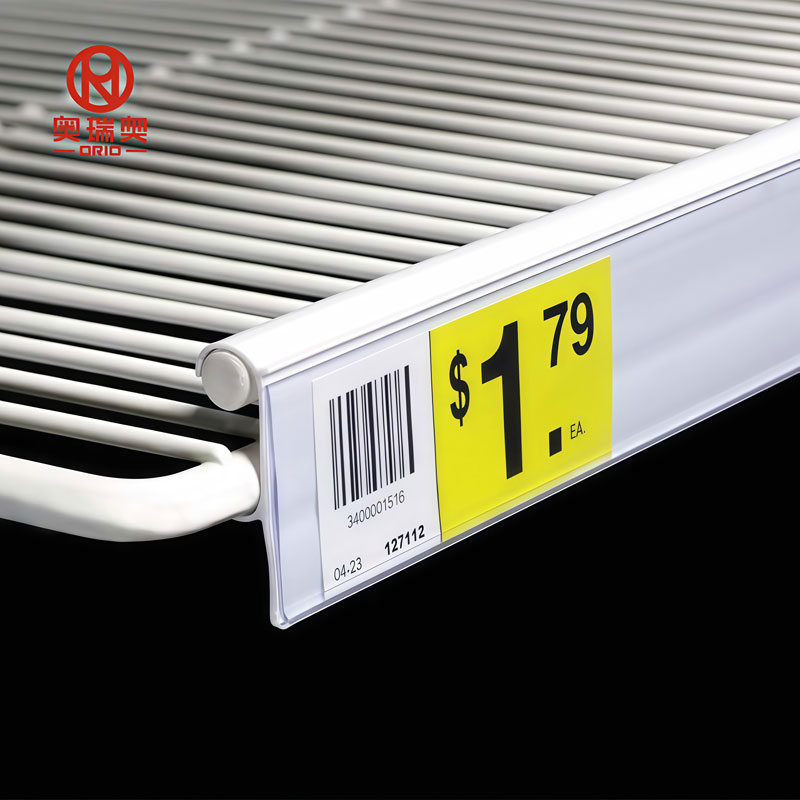
Refrigerated and freezer displays create more demanding conditions than standard indoor shelving.
Shelf label holders used in coolers, refrigerated cabinets, and other cold-chain environments may be exposed to:
· Low temperatures
· Condensation
· High humidity
· Repeated temperature changes
· Cleaning procedures
· Mechanical handling
Under unsuitable conditions, some plastic profiles can become brittle, deform, or crack.
A material that performs well under normal indoor conditions may not provide the same performance at low temperatures.
As temperature decreases, certain plastics can become less flexible and more susceptible to cracking when subjected to impact, bending, or repeated handling.
Therefore, buyers should consider the minimum operating temperature of the application rather than selecting a holder based only on its appearance or standard retail use.
Refrigerated displays can create condensation, particularly when doors are opened frequently or when temperature and humidity fluctuate.
A suitable holder should maintain its structural and dimensional performance under the expected moisture conditions.
Repeated transitions between different temperatures can place additional stress on plastic profiles.
For example, a refrigerated display may experience changes during:
· Store opening and closing
· Restocking
· Cleaning
· Defrost cycles
· Changes in operating conditions
For demanding applications, evaluating temperature cycling can therefore be more useful than considering a single temperature rating alone.
When selecting a holder for refrigerated or freezer shelving, buyers should evaluate:
· Minimum operating temperature
· Flexibility at low temperatures
· Impact resistance
· Dimensional stability
· Moisture exposure
· Cleaning requirements
The appropriate material and profile design should be selected according to the actual operating environment rather than assuming that a standard ambient-temperature holder will perform equally well in refrigerated applications.
Retail pricing changes frequently, particularly during promotions, seasonal campaigns, and routine price updates.
As a result, shelf label holders may be subjected to repeated insertion and removal of paper or plastic labels. Over time, this creates mechanical stress on the holder.
Repeated label replacement can gradually affect the holder's:
· Label channel
· Front lip
· Clip structure
· Surface appearance
· Label retention
The rate of wear depends on the material, profile design, label thickness, insertion method, and frequency of use.
If the label channel is too flexible or does not have sufficient structural stability, repeated use may cause deformation.
A deformed channel can make labels difficult to insert or remove and may reduce the holder's ability to retain labels securely.
The attachment mechanism can also experience repeated mechanical stress.
If the clip is repeatedly flexed beyond its intended range, it may lose its original holding force or become damaged.
For high-frequency applications, buyers should consider both the profile material and clip geometry rather than evaluating the holder only by its initial installation performance.
For extruded shelf label holders, manufacturing consistency is particularly important.
Stable extrusion processes help maintain critical profile dimensions and reduce variations that could affect:
· Shelf attachment
· Label retention
· Channel dimensions
· Overall appearance
For large-volume retail projects, consistent production quality can be just as important as the nominal material specification.
Retail shelving systems are not standardized across all stores, manufacturers, and applications.
A holder that fits one shelf may not securely attach to another shelf with a different edge profile.
Common applications include:
· Gondola shelving
· Supermarket shelving
· Convenience store shelving
· Pharmacy fixtures
· Refrigerated shelving
· Freezer displays
· Custom retail fixtures
The shelf-edge geometry determines how the holder attaches to the shelving system.
Differences in the profile can affect the holder's:
· Clip engagement
· Insertion depth
· Position
· Stability
· Label viewing angle
Critical dimensions may include shelf-edge thickness, height, channel dimensions, and clip geometry.
Using only a general shelf description may therefore be insufficient for accurate product selection.
The attachment mechanism should match the physical structure of the shelf.
A holder with the wrong clip geometry may appear similar to the required product but fail during installation or daily operation.
For customized or large-volume projects, sample testing is one of the most effective ways to reduce compatibility risks.
Buyers can provide:
· Physical shelf samples
· Existing label holder samples
· Technical drawings
· Dimensional specifications
· Photos with measurements
The manufacturer can then evaluate the profile and develop or recommend a suitable solution before mass production.
The best time to prevent shelf label holder problems is before placing a bulk order.
Instead of evaluating only unit price, buyers should assess the holder against the actual operating and installation conditions.
Check Before Ordering | What to Verify |
Shelf compatibility | Shelf-edge dimensions and profile |
Material | PVC, PET, PC, Acrylic, or application-specific material |
Temperature | Ambient, refrigerated, or freezer conditions |
UV exposure | Indoor lighting, sunlight, and display location |
Chemical exposure | Cleaning and disinfecting requirements |
Label changes | Expected insertion and removal frequency |
Dimensional accuracy | Critical profile and clip dimensions |
Sample testing | Fit, retention, and durability |
Customization | Size, color, structure, and packaging |
Production consistency | Dimensional stability between batches |
For large retail programs, this evaluation can help identify potential problems before they become widespread installation or maintenance issues.
Product performance depends not only on the material selected but also on profile design, manufacturing precision, quality control, and application knowledge.
When evaluating a Shelf Label Holder manufacturer, buyers should consider:
Stable extrusion processes help maintain consistent profile dimensions and reduce variation between production batches.
Reliable raw material sourcing and controlled material specifications can help maintain consistent mechanical and optical properties.
Manufacturers should understand the operating conditions of the intended application, including temperature, humidity, UV exposure, and cleaning requirements.
Custom development can be important when standard profiles do not match an existing shelving system.
Depending on the project, customization may include:
· Profile dimensions
· Clip structures
· Colors
· Material selection
· Co-extrusion
· Printing or branding
· Packaging
For multi-store retail projects, buyers need more than a suitable sample. The manufacturer should be able to maintain consistent product quality throughout mass production.
ORIO specializes in Price Tag Holders, Shelf Label Holders, and retail display accessories for global retail applications.
The company uses mono-color and dual-color co-extrusion technology and states that critical dimensional tolerances can be controlled within ±0.05 mm for applicable products. ORIO also offers solutions using PVC, ABS, PET, Acrylic, food-grade materials, and recycled materials for different retail applications.
For projects requiring non-standard dimensions, shelf compatibility development, or OEM/ODM production, buyers can discuss their shelf profile, application environment, and technical requirements with the manufacturer.
OEM & ODM Customization Services
Price Tag Holder problems such as falling off, yellowing, cracking, premature wear, and poor shelf compatibility are often related to factors that can be evaluated before installation.
Shelf profile compatibility, material properties, environmental conditions, dimensional accuracy, profile design, and manufacturing consistency should all be considered when selecting a shelf labeling solution.
For supermarkets, convenience stores, pharmacies, refrigerated displays, and large retail programs, sample testing and technical verification before mass production can help reduce installation problems, maintenance work, and replacement costs.
A reliable Shelf Label Holder should fit the intended shelving system securely, maintain its appearance under the expected environment, withstand normal label replacement, and provide consistent performance throughout the required service life.
Choosing the right product is therefore not simply a matter of comparing unit prices. It is about matching the holder's design, material, and manufacturing quality to the actual requirements of the retail application.
A Price Tag Holder may fall off because its profile or clip structure is not compatible with the shelf edge. Incorrect dimensions, insufficient clip engagement, or dimensional variation can also contribute to poor retention. Checking the actual shelf profile and testing samples before bulk purchasing can help identify compatibility problems.
Yellowing can be related to material formulation, UV exposure, heat, cleaning chemicals, and long-term aging. For applications where appearance and transparency are important, buyers should evaluate the material's long-term environmental performance rather than relying only on its initial clarity.
Select a holder designed for the actual low-temperature environment. Buyers should consider minimum operating temperature, low-temperature flexibility, impact resistance, moisture exposure, and temperature cycling. Sample testing under representative conditions can also help verify suitability.
The most reliable approach is to provide the shelf-edge dimensions, profile drawing, or a physical shelf sample. The holder should be evaluated for clip engagement, insertion depth, dimensions, and label position rather than selected solely by a general product name.
Suitable holders can be designed for repeated label insertion and removal, but service life depends on the material, channel design, clip structure, label thickness, and usage frequency. For high-turnover retail environments, buyers should consider mechanical durability as part of product selection.
Not necessarily. Refrigerated and freezer environments can expose holders to lower temperatures, condensation, humidity, and temperature cycling. A holder suitable for normal indoor shelving may not provide the required performance under these conditions.
Customization is worth considering when a standard holder does not fit the existing shelf profile, when specific dimensions or clip structures are required, or when the project requires custom colors, co-extrusion, branding, or packaging.
Useful information includes shelf dimensions, profile drawings, physical samples, label dimensions, operating temperature, environmental conditions, expected order volume, and any requirements for color, packaging, or branding. Providing accurate technical information at the beginning of the project can significantly improve development efficiency.
If you are experiencing problems such as loose holders, poor shelf compatibility, cracking in refrigerated environments, or premature wear, ORIO can help evaluate the requirements of your application.
Send us your shelf dimensions, profile drawing, existing holder sample, label size, or application requirements. Our team can review the specifications and recommend or develop a suitable Shelf Label Holder solution for your project.


